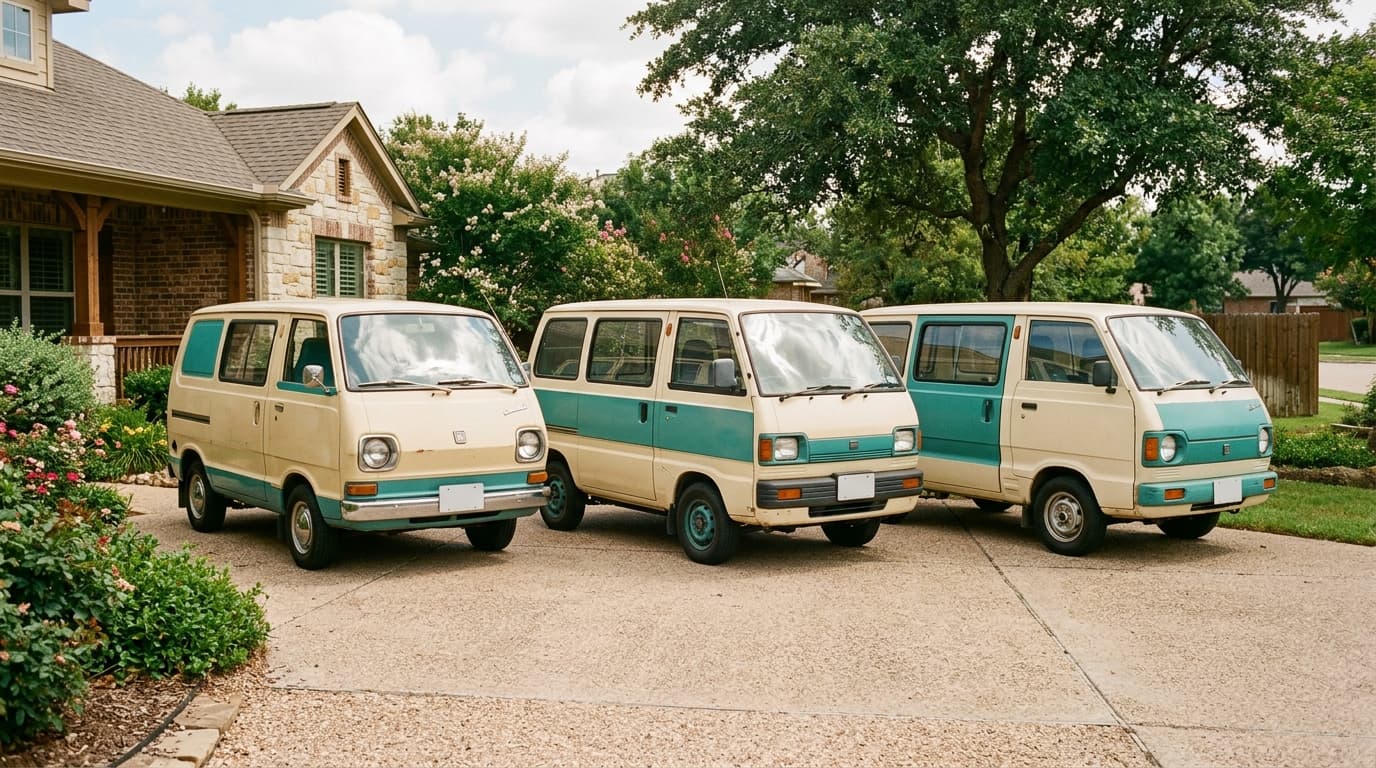
Berlingo, Rifter and Combo Life are built in the same Spanish plant, on the same platform, with the same engines. For a Belgian family, the choice therefore comes down not to the mechanicals but to the negotiated price, the trim and the dealer network. Here are the figures to decide with confidence.
Berlingo, Rifter and Combo: are they really different?
No, not under the body. A family MPV (ludospace) is a small people-carrier derived from a van, designed first for volume and price. The Citroën Berlingo, Peugeot Rifter and Opel Combo Life are triplets: the same Stellantis platform, the same engine blocks, the same Vigo factory.
In practice, you are buying the same car dressed three ways. Citroën leans on comfort and a laid-back image, Peugeot adds its i-Cockpit (compact wheel, raised instrument cluster) borrowed from the 3008, Opel plays the equipment-to-price ratio. Toyota (Proace City Verso) and Fiat (Doblo) add two more clones.
On the Belgian market, this kinship is good news: the base has proven reliable for years, and internal competition pushes prices down. The 1.2 PureTech 110 hp petrol and the 1.5 BlueHDi 100 hp diesel are common to all three.
Which family MPV has the biggest boot?
None really wins: the volumes are identical within a few litres. In size M (4.40 m), expect around 775 L under the parcel shelf with five seats, and up to nearly 2,700 L with the bench folded. The XL size (4.75 m) adds volume and allows a third row.
The figure that matters for a family is the boot once the children are aboard. With five seats, those 775 L swallow a pushchair, a large shopping bag and the sports kit without playing Tetris. That is clearly more than a compact SUV at the same price, which often tops out around 450 to 500 L.
≈ 300 L
Boot space with all 7 seats in use
What we would avoid: assuming an XL seven-seater stays a touring family car once the third row is up. The boot then drops to about 300 L, enough for a changing bag and two holdalls, not the luggage for a seven-up holiday departure.
How many Isofix child seats can you fit?
This is the segment's real strength. All three MPVs offer three individual rear seats about 48 cm wide each, with Isofix anchors on the two outer positions. Fitting three child seats abreast is therefore more realistic than on a standard bench, where the centre console and width quickly cause trouble.
In practice, for a family of three children, this is the decisive argument against a five-seat family SUV. The seats slide and fold individually, letting you trade between passengers and luggage case by case.
Should you go for the five or seven seater?
For two children, the size M five-seater is plenty and costs less. The seven-seat version (XL) is only justified with three children or regular trips with more than five aboard, accepting the reduced boot when everyone is on board.
Are the outer seats enough for two babies?
Yes: two rear-facing Isofix child seats fit without constraint on the outer positions, and access stays good thanks to the sliding doors, valuable on a tight car park or at the school gate.
Price and budget comparison in Belgium
The 2026 list prices are tight, as the table below shows. Over five years, the gap between the three brands is smaller than the one created by a simple dealer discount or a current offer.
| Model | BE 2026 price (from) | Boot 5 seats (M) | Rear seats | Strength |
|---|---|---|---|---|
| Citroën Berlingo | EUR 26,120 | ≈ 775 L | 3 individual | Price, engine range |
| Peugeot Rifter | EUR 26,165 | ≈ 775 L | 3 individual | i-Cockpit, looks |
| Opel Combo Life | ≈ EUR 25,500 | ≈ 775 L | 3 individual | Equipment/price |
| e-Berlingo / e-Rifter | EUR 35,560 | ≈ 775 L | 3 individual | 0 g, tax |
The total budget over five years depends mainly on the engine and mileage, not the badge. A Berlingo 1.5 BlueHDi 100 diesel starts at EUR 28,070 and stays relevant above 25,000 km/year; below that, the 1.2 PureTech petrol is cheaper all-in. The Opel Combo Life advertises a less visible entry price but matches up at the dealer.
Petrol, diesel or electric: what to choose for a family?
For classic family use in Belgium, the 1.2 PureTech 110 petrol is the default choice: frugal in town, simple, the cheapest to buy. Diesel only pays off above 25,000 km/year. Electric targets high-mileage drivers and company cars.
The e-Berlingo and e-Rifter (50 kWh battery) claim about 280 km WLTP, up to 345 km on the latest LFP battery, from EUR 35,560. On the motorway in winter, real range often falls to 200 or 230 km: comfortable for the home-school-shops run, frustrating for a long fully loaded trip.
Berlingo, Rifter or Combo: which to choose?
Since the mechanicals are shared, separate them on three concrete criteria: the price actually negotiated (monthly offer and trade-in), the trim (the Rifter's i-Cockpit pleases or annoys, so try it in person) and the nearest dealer for servicing.
For a private purchase focused on volume and budget, the Berlingo and the Combo Life fight for the best deal depending on promotions. The Rifter appeals to those who want a more distinctive driving position. And in this segment, a recent two-to-four-year-old used example, with known and well-maintained mechanicals, often remains the best euro a family can spend.
Comparateur Monospaces & ludospaces
Compare tous les monospaces & ludospaces côte à côte.
Comparer maintenant →
Frequently asked questions
Audrey teste des familiales depuis 2015, maman de deux enfants, basée à Wavre. Elle installe vraiment les sièges Isofix avant de juger l’habitabilité et calcule le budget sur cinq ans, carburant et entretien compris. Sa boussole : peut-on y mettre deux sièges-auto et les courses sans jouer à Tetris ?